
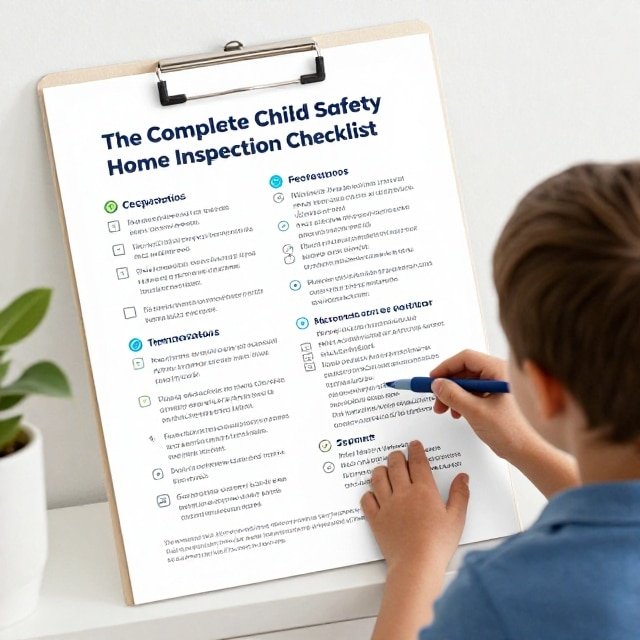

What every parent and homebuyer should check for before it’s too late
When it comes to keeping kids safe at home, the biggest hazards are often the ones parents never think to look for. On a recent episode of Home Improvement USA, host Dave Rush sat down with Chris Earley, a franchise owner with Inspect-It 1st Property Inspection near Philadelphia, Pennsylvania, to walk through the child safety issues professional home inspectors look for every single day.
Here’s a room-by-room breakdown of what to check in your own home.
Water Hazards: The Most Overlooked Danger
Five-Gallon Buckets
It sounds minor, but ordinary five-gallon buckets are a serious drowning risk for toddlers. Young children are curious enough to lean in headfirst — and because of their size and center of gravity, they often can’t get themselves back out. Earley, a father of three young daughters, says this is a hazard every home inspector checks for, and one every parent should take seriously, even when the bucket is empty. Keep buckets out of reach of small children whenever possible.
Tubs, Sinks, and Toilets
Drowning is the second leading cause of death in infants, right behind motor vehicle accidents. Even a few inches of standing water can be dangerous. Earley described one situation where a family, without a crib or portable playpen available, placed a sleeping child in a bathtub overnight — only for the child to wake up, turn on the faucet, and drown after a blanket blocked the drain. The takeaway: never leave a young child unattended near any source of standing water, even briefly.
Pools, Spas, and Fountains
For homes with pools, inspectors focus heavily on barriers and access points, including:
- Pet doors leading to pool decks, which can allow a child to slip outside unnoticed. Any pet door should be lockable.
- Door alarms that sound whenever an exterior door leading to the pool area is opened.
- Fencing with child-safety locks around the entire pool area — a standard item flagged during home inspections.
Even with every safety feature in place, Earley emphasizes that nothing replaces direct adult supervision.
Garage Doors: An Underrated Crushing Hazard
Garage doors present a real crushing risk to small children, and inspectors test for two key safety features:
- Beam detectors — small sensor boxes mounted on either side of the garage door track. If something breaks the beam while the door is closing, it should automatically reverse.
- Resistance/auto-reverse function — if the door meets resistance while closing (such as an arm or a block of wood), it should stop and reverse. This is controlled by a tension screw that can typically be adjusted with a basic screwdriver.
Older garage door openers that lack beam detectors can often be upgraded with a retrofit kit.
Guardrails and Handrails: Watch the Gaps
Fall hazards are a major concern in older homes, particularly around stair railings. Current safety standards require gaps in handrails to be no wider than 4 inches — roughly the size of a toddler’s head. Many older homes were built with wider gaps that don’t meet this standard.
If your railings have larger openings, adding plexiglass, mesh, or netting is a simple, inexpensive fix.
Poisoning Prevention
The best defense against accidental poisoning is limiting access. Recommended safeguards include:
- Cabinet safety latches
- Protective covers on doorknobs for rooms where chemicals or medications are stored
- Keeping hazardous items out of reach entirely, when possible
- Posting the Poison Control Center number somewhere visible, like on the refrigerator
Carbon Monoxide and Fire Safety
Carbon Monoxide Detectors
Carbon monoxide poisoning contributes to roughly 300 deaths per year in the U.S. It’s produced any time fuel is burned — from furnaces to grills — and can cause fainting, headaches, vomiting, or death at high enough levels.
Best practices include:
- At least one carbon monoxide detector per home, ideally near the furnace or heating source (often at the top of basement stairs)
- Testing detectors regularly and replacing batteries twice a year, similar to smoke detectors
- Never bringing a grill into an enclosed space like a garage — combustion fuel sources should always stay outdoors
Smoke Detectors
Requirements vary by municipality, but general guidance includes:
- At least one smoke detector per floor, with many areas recommending one per bedroom as well
- Some municipalities require hardwired units
- Regardless of type, batteries should be tested monthly and replaced at least twice a year
Family Fire Escape Plans
Every household should have a clear, practiced emergency exit plan — including a designated meeting spot outside the home. Earley recommends reviewing the plan with kids regularly (his family reviews theirs whenever they spot a fire truck in the neighborhood) so that, in a real emergency, everyone knows where to go without hesitation.
Bedroom and Basement Window Access
Bedrooms need a secondary exit beyond the door — typically a window large enough for someone to climb through. This becomes especially important in finished basements, where local building codes often require an additional way out besides the stairs, such as an egress window with a window well and exterior hatch.
One major red flag inspectors look for: security bars on windows that can’t be released from the inside. While they may deter intruders, they can also trap occupants during a fire. Any window security bars should have an interior quick-release mechanism.
Closets, Crawl Spaces, and Small Enclosed Areas
Kids are drawn to tight, enclosed spaces — which is exactly why inspectors check them closely. Common issues include:
- Closet doors with an exterior knob but no interior release, which can trap a child inside
- Doors that seal too tightly, restricting airflow if someone becomes trapped
- Crawl space access doors with a latch on the outside but none on the inside
If a door can be locked from one side, it should be operable from the other side as well.
What to Expect From a Professional Home Inspection
For homebuyers, a typical inspection follows a due diligence period of about 10 to 14 days after a home goes under contract. Inspections generally take two to four hours, depending on the size and age of the property, and result in a detailed report to help buyers make an informed decision.
Pricing for a single-family home inspection through Inspect-It 1st typically starts around $350–$450, depending on the home’s size, age, and condition. Additional services — such as termite inspections or radon testing — are often available as add-ons, and are especially common in areas where radon levels tend to run high.
Additional Resources
Earley also recommends signing up for recall alerts through the Consumer Product Safety Commission (CPSC) at cpsc.gov, which sends notifications any time a government safety recall is issued for household products.
For more information, visit Inspect-It 1st online or call 877-392-6278. Their website also includes a white papers section with additional guidance on child safety and other home safety topics for consumers, homeowners, and real estate professionals.